Research
I am a senior research academic with 25 years’ post-doctoral experience, over 50 peer-reviewed publications, and over 4,000 citations (according to Google Scholar). As well as research I supervise and examine PhD students, review papers and grant applications, and present at conferences and workshops.
In my career to date I have worked across a range of research areas and methodologies - probably more than I should have - in part because of a rewarding set of collaborations with individuals and organisations. This has spanned associative learning, lifespan cognitive development and decline, contextual decision making, categorisation, cognitive biases, game theory, individual and group differences, financial decision making, empirical legal studies, forecasting, misinformation, and risky and intertemporal choice.
In methodology I was an early pioneer of web-based cognitive research, a strand I have developed to look at opportunities and challenges for web- and mobile-based data collection. I have also innovated in using novel technologies - balance boards and smartphones - to address empirical questions. I use a range of methods: controlled lab- or web-based experiments, correlational studies, secondary data analysis, modelling, and qualitative approaches.
Much of this research work has been in collaboration with other organisations, including frequent work with the BBC to gather data from over half a million website visitors across several projects - including personality and art preference and sex differences in cognition - linked to individual TV series on which I worked as a researcher or scientific adviser.
My own areas of research are related to judgement and decision making (or behavioural science, behavioural economics, economic psychology, depending on what you like to call the field). I list my main areas of interest below.
Judgement and decision making
My main interest is in the way people make decisions and the factors that affect their decision making. This draws on the heuristics and biases tradition - the idea that our mind uses a wide range of shortcuts and rules of thumb that allow it to make judgements and decisions that are quick and usually pretty good but sometimes go awry in ways that work against our best interests. As well as looking at some of the things that affect our decision making, I am also interested in the ways in which we can structure the decision environment to help people make decisions that they're happier with long term - the idea of nudging people towards a beneficial option where they don't have a strong inherent preference. This could be anything from choosing a lower-fee investment or pension option to taking the stairs rather than the lift.
More specifically, much of my research focuses on time and the idea of delay discounting - the extent to which intervening delay makes an option less attractive: Would you rather have £45 in 3 days or £70 in 3 months? As well as looking at some of the factors that make people more willing to wait, I'm interested in the cognitive processes underlying the time-related choices people make, using response times and eye tracking to see the processes people go through when making decisions.
I also have an ongoing interest in forecasting - how we use our judgement to extrapolate trends and predict what will happen next. This could be looking at sales or stock values, weather patterns, or disease case numbers. I have found that people's forecasts for a given trend are affected by other recent trends they've seen, and the graphical format in which trends are displayed.
Finally, across all decision-making research areas, I have a longstanding interest in contextual decision making and the effects of the decision context on the choices people make.
Methodological development
I have always had an interest in exploring new technologies for research. This has led me to look at devices such as digital balance boards to look at postural effects on decision making, and various areas of functionality of mobile devices. I was one of the first researchers to measure response times online, back in 2003 using Macromedia Flash, and led one of the early major online research projects with the BBC, which had over 250,000 participants and led to over 20 publications across a collaborative team.
I spent three years as associate editor of the flagship methodological journal Behavior Research Methods, during which time I handled over 120 manuscripts generally focusing on methodological innovations.
Education
I am a passionate educator, teaching a wide range of students from undergraduates new to the university system to master's students coming from senior positions in commercial organisations.
I am a Senior Fellow of the Higher Education Academy, I have an MA in Academic Practice from City St George's and an MSc in Science Communication from Imperial, and have won a range of teaching awards at institutional level.
I teach on City's MSc Behavioural Economics programme, leading a module on cognitive psychology and decision making and contributing to others. I also have an undergraduate module on Behavioural Economics and Decision Making, and contribute to other modules. I also have experience teaching the Psychology of Creativity to MSc students at Bayes Business School, and contributing in a range of other areas, including social psychology, health sciences interprofessional learning and financial journalism.
I also teach on - and was involved in the design of - a cross-university module on sustainability and climate change, which received a commendation at the Graduate Futures Award, 2026.
Applying learning
I try to align assessments with real-world skills that graduates need to make them relevant for students. Students write applied reports for hypothesised commercial clients, from which I have sent anonymous examples to leaders in various relevant sectors to give practical feedback. I run seminar activities in which students work together to decide on market positioning of new products, use psychological approaches to resolve disagreement, design compelling advertising materials for charity campaigns, and dissect attempts to persuade in materials from marketers and politicians.
Technological innovation
I use AI in circumscribed ways in my teaching. For example, I had business school students apply their insights on creative problem solving to build a chatbot that applied psychological theory to support executive decision making. In teaching on the psychology of climate change I have an activity in which students have to have a discussion with a climate sceptic, to understand alternative perspectives and look at how persuasion does and doesn't work.
Educational escape rooms
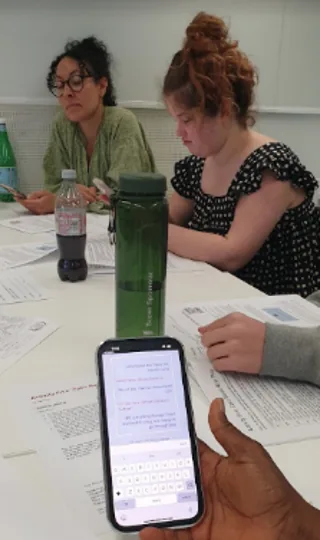
I use escape room activities in a number of educational settings. I run a collaborative escape room activity across induction sessions for our 400-student BSc intake, where students have to work in small groups to solve puzzles, research the university and course, call phone numbers to receive clues, scan barcodes, and sort through a thousand index cards to find the right code. This serves both as an ice-breaker and as a model for collaborative working as they proceed through university.
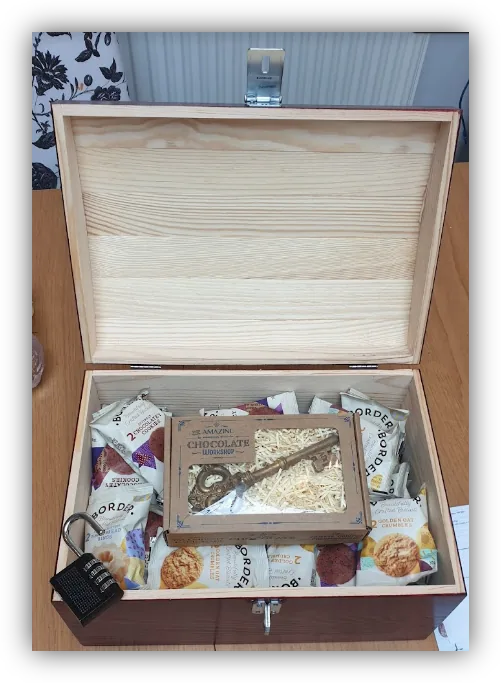
I also run lower-key open-the-chest escape rooms in my module teaching, where students have to find the kinds of educational resource they need for their assessments in order to crack a code and open the box. This model is easily applied to other programmes, and I lend out props - combination locks, treasure chests - for this activity for colleagues to use.
Scalable activities
I create activities that engage students at scale. For example, in the school's Interprofessional Learning Days, where students of nursing, radiography, speech and language therapy and midwifery come together to learn about and from each other, I designed and led a series of activities in which the 200 students participating in 15 seminar rooms across campus took part in webinar-based ice-breaking and educational activities (including getting-to-know-you bingo modelled on holiday park multisite bingo games). Each group could see the progress and contributions of the other groups on the projector screen and try to win prizes for performance. This created a positive group dynamic and had high engagement.

External
I have had two major external examiner roles. At Warwick Business School, I had oversight of the psychology and behavioural science modules and dissertations across their undergraduate, MBA and PhD programmes. At King's College London I was one of two external examiners responsible for the BSc Psychology programme.
Since completing four years as an external examiner at King's, I have acted as an expert subject specialist, contributing to periodic reviews of the BSc Psychology (2025) and Neuroscience and Psychology (2026) programmes.
I also have a range of more strategic educational leadership roles, which can be seen under the leadership tab.
Academic leadership
I currently have three main academic leadership roles: Academic Director, member of the Shadow Leadership Board, and co-chair of the university AI Education Committee.
Academic Director
Digital Education and Innovation · since 2022
This is a - usually enjoyably - challenging digital leadership role across our School of Health and Medical Sciences, with 10,000 students and over a thousand staff. Following the merger between City, University of London and St George's, University of London, the School of Health and Medical Sciences in which I work now comprises the vast majority of the departments from the former St George's and City's former School of Health and Psychological Sciences. As such it has faced most of the operational turbulence to arise since the merger, with the alignment of different policies, digital platforms and teaching approaches.
As Academic Director, I hold the sole school-level role with a digital focus, so it has a broad remit covering Digital Capability and Upskilling, AI Adaptation and Integration, and Digital Innovation and Transformation.
Although the role in practice picks up various issues that have a digital element - such as reviewing educational technology business cases, advising on programme-level AI plans, collating and escalating inter-departmental IT issues, and providing information for the university about school-level digital matters - the main work I do falls into three areas:
Digital capability and upskilling
Our academic staff come from a diverse range of backgrounds - many are career academics, like me, but we have visiting lecturers, clinical teaching fellows and other colleagues who practise outside academia but spend some time teaching. This works well from a pedagogical perspective, but has challenges around digital capability, both in mastering the systems used and in the digital approach taken at school level in teaching and marking.
I work at school level and with individual departments and programmes on digital capability, particularly around AI. I run cross-school training sessions on AI and Assessment and AI in Teaching, as well as hands-on "Can ChatGPT pass your assignment?" activities. I work with departments at awaydays to develop approaches to assessment in the context of AI, and have also organised and hosted events such as Health's Got Talent, a showcase for sharing and recognising educational innovation across the school. I work closely with our departmental Leads for Teaching Excellence, who have a departmental-level overview of digital needs, and consult with them on various projects, including recently completing Jisc's Digital Maturity Self-Assessment exercise.
AI adaptation and integration
I develop and support practical implementation of university AI policy. For example, I developed a school-wide Permitted Use Statement for AI in assessments, drawing on best practice in consultation with the university, school programmes, and the Students' Union. This statement now appears on each of the Assessment Briefs used across the school, and has had favourable feedback from students and external examiners. I took this forward with the AI Education Committee as a template for a university-wide approach to permitted use of AI, which has now been rolled out. I also conducted a review of the 650 assessments run on our Clerkenwell campus, identifying programmes with significant vulnerability to AI use in their assessments, and offered guidance on mitigating those risks.
Digital innovation and transformation
I support the innovative use of technology in education where it enhances learning and the student experience. This can involve raising awareness of opportunities to take part in university trials of new technologies, and sharing examples of innovative digital practice across departments, but often involves working closely with departments and programmes to create bespoke educational tools. Many of these are AI-based (see the Digital section), and include:
- A contact lens history-taking activity for Optometry students, where they interview an AI patient, take measurements and select appropriate lenses, explaining why they made the decisions they did and what the next steps are.
- A set of AI-driven activities for Speech and Language Therapy students who take patient histories, write structured (SOAP) notes, and make phone calls to AI patients, health visitors or teachers about a specific case.
- A virtual psychology clinic in which students practise running low-intensity CBT sessions with AI clients before meeting real clients later in their course.
This approach of working closely with programmes to identify needs and provide bespoke solutions helps build engagement and models some of the benefits of using new technologies.
Shadow Leadership Board
Member · since 2023
I have been an active member of the 12-strong university Shadow Leadership Board since its inception in 2023. A rarity in academia, but more common in government and the civil service, the shadow board reviews strategic papers ahead of their discussion in Senior Leadership Team meetings, and gives feedback which is passed on in summary form to the SLT during their discussion. The wide range of perspectives from staff at all levels of seniority across academic and professional services roles is intended to broaden the collective understanding of issues and improve decision making.
The board is also designed as a development route for staff with an interest in university leadership, giving an overview of how a university operates, and the types of decisions that it makes. In this role I have access to and review strategy documents across all of the institution's activities - including education, research, finance, facilities and HR - giving an excellent insight into university organisation and the sector challenges more generally. I have also on occasion represented the shadow board at Senior Leadership Team meetings.
AI Education Committee
Co-chair
I co-chair the university AI Education Committee, which provides guidance on university approaches to the use of AI in an education context. This includes AI education and upskilling for students, assessment design and integrity, trials of AI-related educational applications and broader AI innovation, and programme-level design and assessment considerations.
As part of this role I have drafted guidance for colleagues on using chatbots in educational activities and the use of declarations in assessments, as well as collating and writing case studies of AI use in education across the institution to share good practice. We also run an AI community of practice for similar sharing of ideas and good practice.
We meet regularly with the Vice President and Assistant VP for Education with regard to AI and education policy.
Outputs
Research and pedagogical publications and talks since 2020.
-
Pedagogy · 2026
Gil, H., Reimers, S., & Witcombe, S. (2026). AI-mediated patients as a novel learning tool for paediatric placements: a mixed methods evaluation of student experience. Archives of Disease in Childhood, 111(Suppl 1), A336–A337. DOI
-
Research · 2026
Botting, N., Del Rosario, C., Flynn, J., Reimers, S., Davies, C., Gonzalez-Gomez, N., Hendry, A., Hill, E. L., McGillion, M., Moss, R., Shapiro, L., & Henry, L. A. (2026). Developmental outcomes at four-years-old in children born in the first Covid-19 lockdown in England: Preliminary findings from the Born In Covid Year – Core Lockdown Effects (BICYCLE) study. Archives of Disease in Childhood. DOI
-
Pedagogy · 2026
Reimers, S. (2026). Generative AI in health sciences education and practice. Part 4: Career development. British Journal of Cardiac Nursing, 21(6), 1–6. DOI
-
Pedagogy · 2026
Reimers, S. (2026). Generative AI in health sciences education and practice. Part 3: Supporting written communication. British Journal of Cardiac Nursing, 21(4), 1–6. DOI
-
Pedagogy · 2026
Reimers, S. (2026). Generative AI in health sciences education and practice. Part 2: Supporting thinking and decision-making. British Journal of Cardiac Nursing, 21(2), 1–6. DOI
-
Pedagogy · 2026
Reimers, S. (2026). Generative AI in health sciences education and practice. Part 1: Chatbots and simulation. British Journal of Cardiac Nursing, 21(1), 1–6. DOI
-
Research · 2025
Hagger-Johnson, G., Reimers, S., Greenwood, D. C., Gow, A. J., & Cade, J. E. (2025). Health literacy in relation to web-based measurement of cognitive function in the home: UK Women’s Cohort Study. BMJ Open, 15(3), e092528. DOI
-
Research · 2025
Moss, B., Henry, L., Davies, C., Del Rosario, C., Gonzalez-Gomez, N., Hendry, A., Hill, E. L., McGillion, M., Prior, E., Reimers, S., Shapiro, L., Van Blankenstein, E., & Botting, N. (2025). ‘I just had to park up at the hospital and leave her’: Retrospective interview study of pregnancy, birth and parenting during the Covid-19 pandemic restrictions. Journal of Family and Child Health, 2(1), 186–195. DOI
-
Research · 2024
Reimers, S., & Harvey, N. (2024). Bars, lines and points: The effect of graph format on judgmental forecasting. International Journal of Forecasting, 40(1), 44–61. DOI
-
Pedagogy · 2024
Reimers, S., & Myers, L. (2024). Using generative AI agents for scalable roleplay activities in the health sciences. In S. Beckingham, J. Lawrence, S. Powell, & P. Hartley (Eds.), Using generative AI effectively in higher education: Sustainable and ethical practices for learning, teaching, and assessment (pp. 82–86). Routledge. DOI
-
Research · 2023
Connor Desai, S., & Reimers, S. (2023). Does explaining the origins of misinformation improve the effectiveness of a given correction? Memory & Cognition, 51(2), 422–436. DOI
-
Research · 2022
LaPlume, A. A., Reimers, S., & Wiseheart, M. (2022). Component processes of probabilistic inference in older adults. Journal of Cognitive Psychology, 34(7), 879–892. DOI
-
Pedagogy · 30 Jun 2026
Building better AI chatbots for roleplays and other inclusive student experiences, workshop at Learning at City St George’s Conference, City St George’s, University of London.
-
Research · 29 May 2026
How can psychological research inform AI-supported decision-making in healthcare and beyond? Research talk at Applications of Decision Research, University of Leeds.
-
Pedagogy · 10 Dec 2025
AI and assessment, presentation co-led with Julie Voce at the AI and Assessment Community of Practice, City St George’s, University of London.
-
Pedagogy · 7 Nov 2025
Talking with students about AI, opening presentation at the Talking with Students About AI Community of Practice, City St George’s, University of London.
-
Pedagogy · Sep 2025
Permitted use of generative AI in assessment, presentation at GenAI and Assessment Day, City St George’s, University of London.
-
Pedagogy · 3 Jul 2025
Building AI chatbots for roleplays, student support, and more, workshop at Learning at City St George’s Conference, City St George’s, University of London.
-
Pedagogy · 3 Jul 2025
Student engagement at scale: A case study of playful and gamified interprofessional learning, conference paper with Lucy Myers at Learning at City St George’s Conference, City St George’s, University of London.
-
Research · Jun 2025
Conducting developmental research online: Some examples and options, workshop at the NeuroDevelopmental Annual Seminar, London.
-
Pedagogy · Jun 2025
AI-assisted learning: Pedagogical opportunities in the age of ChatGPT, invited keynote at the Teaching and Learning Day, Tavistock and Portman NHS Foundation Trust, London.
-
Pedagogy · 19 Jun 2025
Strengthening collaboration between academic and digital teams, breakout presentation and panel contribution at Demonstrating Digital Transformation: Building a Coalition of the Willing, City St George’s, University of London.
-
Research · May 2025
Information presentation and consumer perceptions, invited talk at the Behavioural Insights for Policy Workshop, City St George’s, University of London.
-
Pedagogy · May 2025
One year on: Using generative AI effectively in higher education, presentation with Lucy Myers at DigitalEd 2025, Atlantic Technological University, Galway.
-
Pedagogy · 15 Apr 2025
Using generative AI in roleplays to build clinical and communication skills: Experiences, challenges, opportunities, plenary presentation at the UKCCC Clinical Communication Conference, City St George’s, University of London.
-
Pedagogy · 26 Mar 2025
Permitting use of generative AI in assessment, webinar with Julie Voce for Digitally Enhanced Education, University of Kent, online.
-
Pedagogy · 19 Jun 2024
Generative AI and assessment – challenges and opportunities, workshop with Simon Hayley, Jane Secker, Susan Blake and Julie Voce at Learning at City Conference, City, University of London.
-
Pedagogy · 19 Jun 2024
Using generative AI in roleplays and other simulations to build practical skills and offer formative feedback, conference paper at Learning at City Conference, City, University of London.
-
Pedagogy · 10 May 2024
Collaborative escape challenges to model co-operative learning, presentation at the Escape Rooms in Education Showcase, hosted online by Heriot-Watt University.
-
Pedagogy · 30 Jun 2023
Using narrative to enhance interactive experiences: From escape rooms to VR adventures and ChatGPT, workshop at Learning at City Conference, City, University of London.
-
Pedagogy · 29 Jun 2023
Are UCAS tariff points a useful metric to predict academic success in an undergraduate radiography programme? Conference paper with Caroline Vince at Learning at City Conference, City, University of London.
-
Pedagogy · 29 Jun 2022
Escape-room challenges for online and offline engagement, workshop at Learning at City Conference, City, University of London.
-
Pedagogy · 28 Sep 2021
Whole-group live teaching ideas, presentation at a LEaD Light Lunch, City, University of London, online.
-
Pedagogy · 26 Jul 2021
Induction for psychology students, presentation at a LEaD Light Lunch, City, University of London, online.
-
Pedagogy · 26 Feb 2021
Making best use of breakout rooms, presentation at a LEaD Light Lunch, City, University of London, online.